The Common Agricultural Policy (CAP) is the framework which regulates the production, sale and processing of agricultural products in Europe. For over fifty years the Common Agricultural Policy has dictated what kind of food is produced and consumed in Europe.
As one of the first common policies created in the 1950s it helped the European Union to ensure food for its citizens in the post war-years. For 50 years, the CAP has driven major decisions on the direction of agriculture in Europe and the spending of considerable European public funds.
In this time it has led to major problems. It has caused damage to the environment – through contributing to climate change, biodiversity loss, soil erosion and water pollution. It has caused the loss of sustainable small farms; lack of work for farmers and workers in rural areas, and the end of production of home-grown proteins like peas, beans and alfalfa. There are massive environmental and social impacts in the global south caused by cheap exports, and the increased import of cheap raw materials produced in an environmentally and socially unacceptable way. The CAP has many dark sides.
Factory farming of livestock is a particular problem for Europe. This system is responsible for 85 percent of total greenhouse gas emissions from the agricultural sector. This is equal to 13 percent of total greenhouse gas emissions if land use and land use change emissions are included.
Factory farming is a major consumer of global cereal stocks. European factory farming sucks up about two thirds of European cereal production, as well as millions of tonnes of cereals from abroad. This has major knock-on impacts on global supplies of food. It also leads to millions of hectares of land being grabbed in South America.
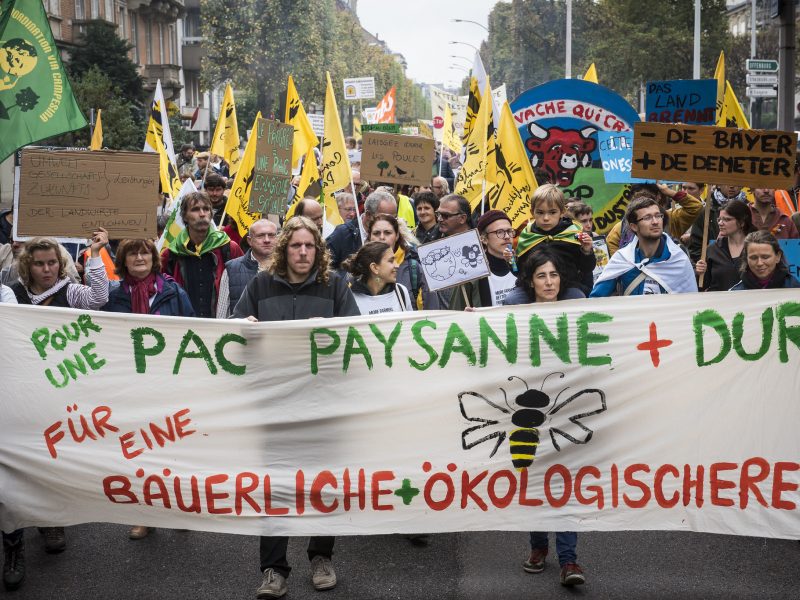
The Common Agricultural Policy is being reformed. The reform is due to be completed in 2013. Friends of the Earth Europe campaigns for the new CAP to provide for better environmental and social targeting of farm support. This should enhance the production of European vegetable proteins, reduce dependence on imports, and support sustainable small farms instead of big industrial farms.
Reform of the CAP must lead to closer synergies between the European crop and livestock sectors to ensure that livestock farmers in Europe become more sustainable. A new CAP must enable livestock farmers to earn a living from sustainable livestock farming rather than from factory farming.
Friends of the Earth Europe believes that some simple measures can help achieve this goal. Strong mandatory 'greening' for all payments would mean that direct payments would be conditional upon basic climate and environmentally-friendly practices.
Enhancing protein production in Europe can help to improve sustainability. Maintaining permanent grassland and real crop rotation on farms, and increasing the synergies between livestock and crop production, can help reduce dependence on imports of environmentally and socially harmful animal feed from abroad.
Complementary, well-targeted rural development measures should be developed that focus on environment and climate protection. These should include measures to support free range pig and poultry farming and support farmers, seed breeders and processors to increase legume cultivation and use.
A detailed paper with concrete solutions for the support and promotion of environmentally and socially friendly agriculture which can be found here